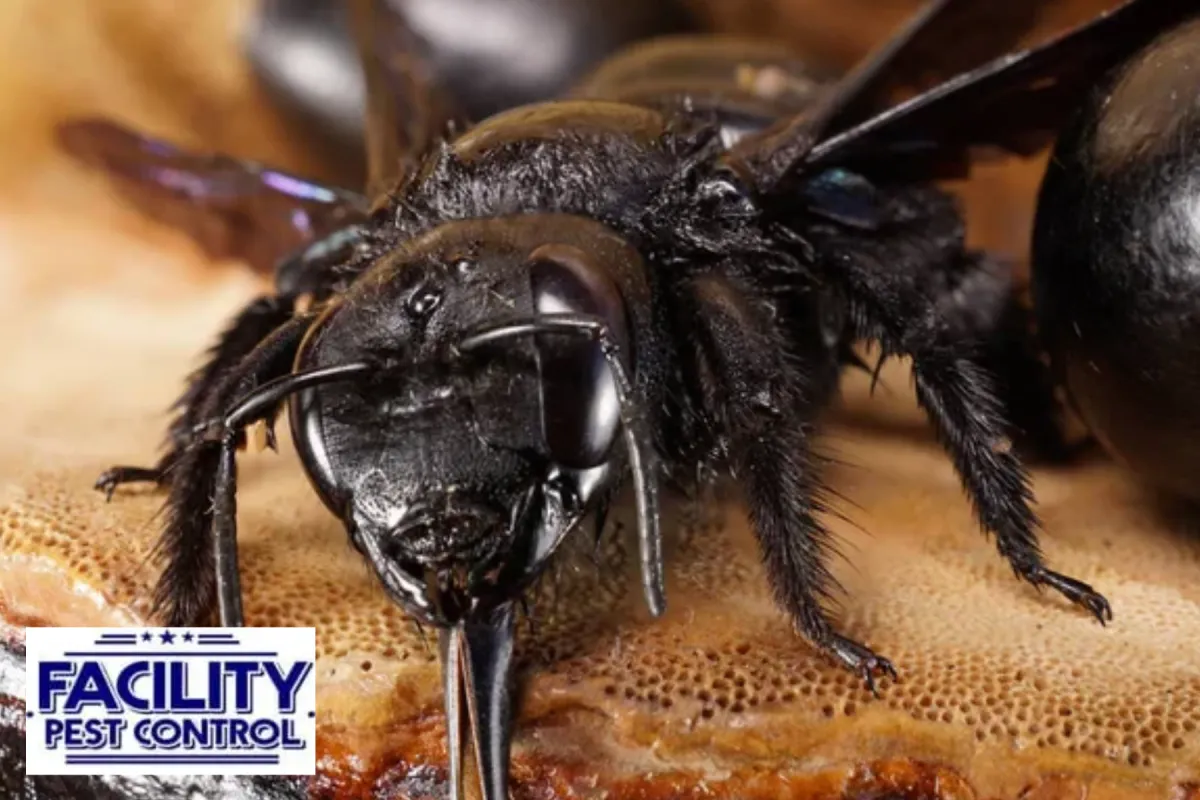
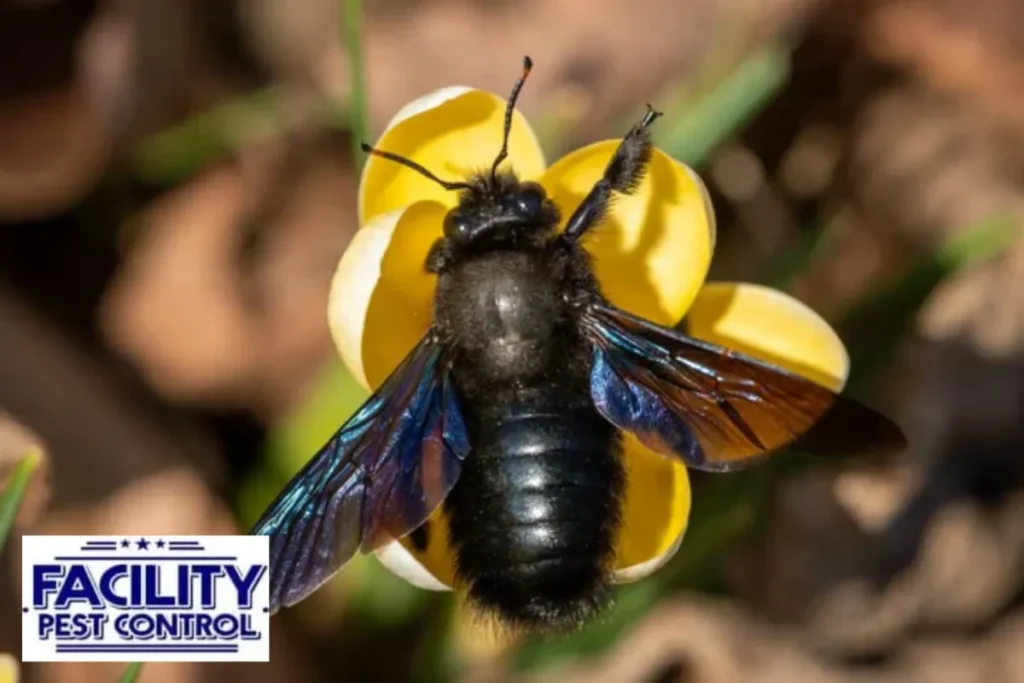
Carpenter bees hover near rooflines in spring primarily because male bees are aggressively defending mating territories while females bore into exposed wooden eaves to create nests for their eggs. The completely stingless males patrol the surrounding airspace to ward off rival males, birds, and even humans.
As the weather warms up, it is incredibly common for homeowners to step outside and find their porches, decks, and rooflines transformed into what looks like a tiny, chaotic airport. Large, black-and-yellow insects hover menacingly at eye level, darting back and forth with a loud, intimidating buzz. This sudden infestation disrupts your daily life, creating anxiety about potential stings and leaving you worried about the structural integrity of your home. To effectively address this problem, it is essential to look beyond the aggressive buzzing and understand the fascinating yet destructive biology driving this seasonal behavior.
Territorial Behavior: Understanding the Spring Swarm
To truly understand why these insects congregate around the highest points of your home, you have to look at the distinct biological imperatives they are following. Spring is mating season. After spending the winter hibernating in old, abandoned tunnels, these insects emerge with two single-minded goals: reproduce and build a safe shelter for the next generation.
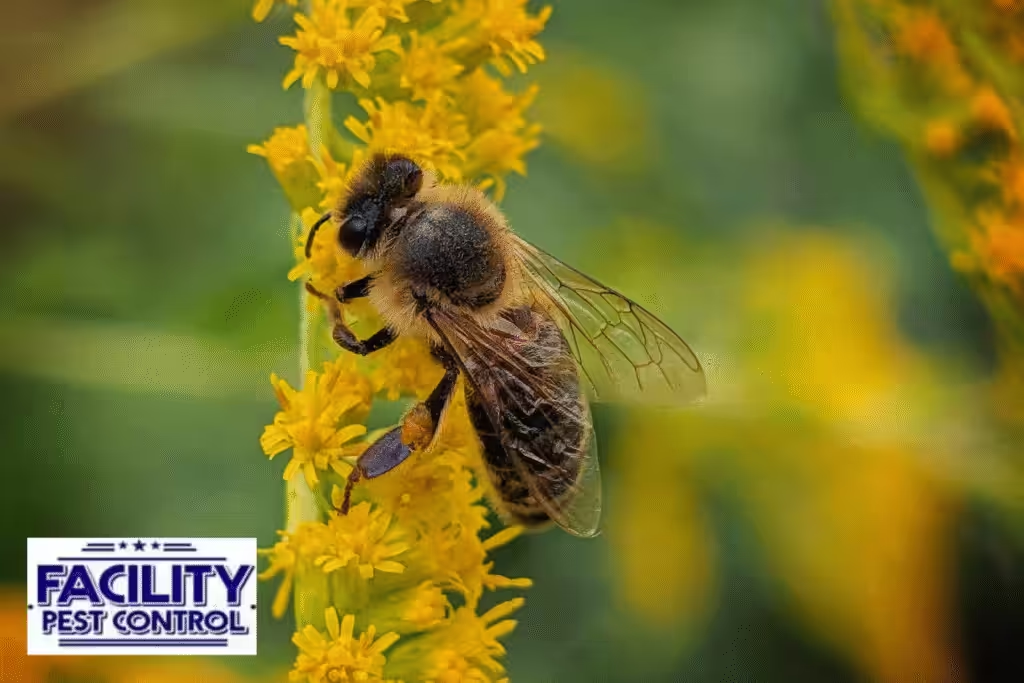
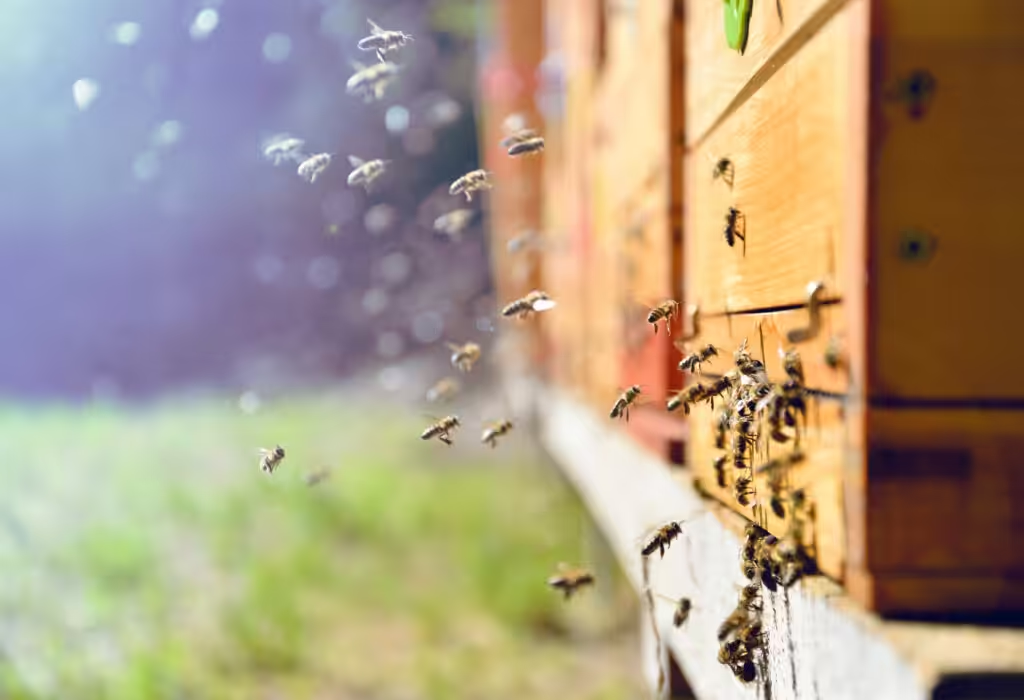
Rooflines offer the perfect combination of what they need: unpainted or weathered wood for nesting and a high, clear vantage point for males to monitor females and rivals. During a recent spring inspection for a homeowner, the customer was completely overwhelmed by what appeared to be a swarm. However, once we observed the flight patterns, it became clear that this was not hive behavior (as in honeybees), but rather individual males holding distinct, invisible boundaries in the air.
Male vs. Female Carpenter Bee Behaviors
Because they are solitary insects, meaning they do not live in colonies or hives with a queen, the males and females operate independently, taking on vastly different roles during the spring season. Here is a breakdown of how their behaviors and physical traits differ:
| Feature/Behavior | Male Carpenter Bee | Female Carpenter Bee |
| Primary Goal | Patrol the air, defend mating territory, and find females. | Find suitable untreated wood, excavate nesting galleries, and lay eggs. |
| Hovering Behavior | Highly active, erratic, darting, and “in your face” hovering to intimidate intruders. | Rarely hovers in the open; mostly seen entering or exiting perfectly round holes in wood. |
| Physical Marker | Has a highly visible, distinctive yellow or white square spot on the front of its face. | Has a solid black face and is generally slightly larger than the male. |
| Danger Level | Zero. Males do not possess a stinger. Their defense is an elaborate bluff. | Low. Females possess a stinger but are docile; they only sting if directly threatened or squished. |
Wood Damage Risks: What’s Happening Inside Your Roofline
While the males are putting on an elaborate aerial show to keep you distracted, the females are doing the actual physical damage to your property. A common misconception is that these insects eat wood like termites. They do not. They excavate it to create safe, climate-controlled “galleries” for their young.
This excavation process creates persistent pest infestations that can severely disrupt your peace of mind and the safety of your home. If left unchecked, the structural integrity of thin boards, like fascias and soffits, can be completely hollowed out from the inside. We frequently see this exact scenario play out; properties we service often show significant hidden damage where seemingly solid wood snaps under mild pressure because it has been turned into a honeycomb of tunnels.
The 4-Step Nesting Process
The structural damage occurs systematically. Understanding this process highlights why proper bee extermination and long-term preventative care are so vital.
- The Initial Breach: The female uses her powerful, saw-like mandibles to bore a perfectly circular, half-inch hole straight into the face of a wooden fascia board, soffit, eave, or deck joist. She prefers softwoods like cedar, redwood, pine, and cypress, particularly if they are unpainted or unvarnished.
- The 90-Degree Turn: After drilling about an inch into the wood, she makes a sharp 90-degree turn and begins tunneling parallel to the grain. This tunnel can run for several inches or even several feet if the gallery is expanded over multiple seasons.
- Creating the Chambers: She partitions the long tunnel into several distinct chambers. Inside each chamber, she places a nutrient-rich ball of pollen and nectar (known as “bee bread”) and lays a single egg on top of it.
- Sealing the Gallery: Finally, she seals each chamber with chewed wood pulp. Once the entire tunnel is filled with eggs, she seals the entrance. The larvae hatch, feed on the bee bread, pupate, and emerge as adults later in the late summer, chewing their way out.
Important Note: The true danger of this process isn’t necessarily a single female digging a single gallery. The danger lies in the fact that these insects return to the same location year after year, deepening and branching out old tunnels. Furthermore, their larvae are a highly sought-after food source for woodpeckers. A woodpecker will utterly destroy the exterior of your wooden roofline, ripping massive splinters away just to reach the larvae inside, causing secondary damage that is often vastly more expensive to repair than the initial boreholes.
Debunking the Myth: “Aggressive Hovering Means You Will Get Stung”
A pervasive misconception in the pest control industry and a major source of profound homeowner anxiety is that the loud, buzzing insects diving at your head are vicious and about to sting you.
The Reality: The insects hovering aggressively around your roofline, engaging in dive-bombing maneuvers, are almost exclusively males. Because male carpenter bees biologically lack a stinger (which is a modified ovipositor, or egg-laying organ found only in females), their entire defense mechanism is an intricate bluff. They rely entirely on their large size, surprisingly loud buzzing, and erratic flight patterns to intimidate predators and humans into leaving their mating grounds.
It is completely natural to feel anxious when a massive insect flies directly at your face. However, knowing that this is a bluff can restore a sense of security. The females, who do possess stingers, are incredibly docile. They spend nearly all of their time hidden inside the wood, focused entirely on building their nests. Unless you physically grab a female with your bare hands or step on one barefoot, your risk of being stung is virtually zero.
Applying our Unique Action Plan to Solve This
When you are dealing with a persistent infestation that threatens your home’s integrity, you need a solution that goes beyond just spraying aerosol cans into the air. That is why we utilize our proprietary Eco-Shield Action Plan. This unique action plan is a highly targeted, multi-step process designed to eliminate the current infestation while prioritizing your family’s and pets’ health and safety.
Instead of relying on outdated, one-size-fits-all, broadcast-spraying methods, our Eco-Shield Action Plan utilizes strategically applied, EPA-registered pesticides formulated specifically for wood-destroying insects.
- Phase 1: Targeted Audit & Treatment: First, our technicians conduct a rigorous inspection to locate all existing galleries and boreholes. We do not spray the air to kill the harmless hovering males. Instead, we apply specialized, EPA-registered insecticidal dusts directly deep into the boreholes. This precise application ensures that the female, as well as the developing larvae inside the chambers, is effectively targeted without unnecessarily exposing the surrounding environment to chemicals.
- Phase 2: Safe Eviction & Plugging: Once the gallery is confirmed inactive (typically a few days after treatment), we proceed to exclusion. Leaving the holes open invites secondary pests or returning bees. We expertly plug the holes using hardwood dowels, specialized wood putty, or steel wool, physically blocking future generations from reusing the same tunnels next spring.
- Phase 3: Environmental Shielding: Because these pests strongly prefer untreated, unfinished wood, our final step focuses on preventative measures. We consult with you on applying protective exterior finishes, such as fresh paint, heavy-duty stains, or specialized citrus- and almond-oil repellents to your roofline. This alters the chemical and physical signature of the wood, making it virtually invisible or highly unappealing to scouting females the following year.
Why Choose a Personalized, Family-Owned Approach
When searching for an exterminator in Van Nuys or the surrounding areas, many homeowners feel forced to settle for large, faceless corporations that treat them like just another stop on a route. Facility Pest Control is different. As a family-owned and customer-focused business, we stand out by offering the specialized attention, trust, and reliability that big businesses simply cannot provide.
We know that dealing with property damage and aggressive pests is stressful. Our goal is to give you total peace of mind and relief by ensuring your home remains secure and pest-free. We believe in tailored pest control solutions. Every home’s architecture is different, and every infestation requires a unique strategy. Our methods focus strictly on safe, family- and pet-friendly treatments that protect both your health and the local environment.
Whether you are looking for reliable pest control in Van Nuys, CA, or need an assessment at a property, our approach remains friendly, professional, and entirely solution-oriented. We build long-term relationships with our clients because customer satisfaction isn’t just a metric; it is our top priority. We want you to feel confident and reassured, knowing you have a dedicated partner protecting your biggest investment.
People Also Ask
What is the best way to get rid of carpenter bees?
The most effective method is a targeted approach: applying insecticidal dust directly into their nesting holes, waiting for the insects to be eliminated, and then permanently sealing the holes with wood putty or dowels. Preventative painting or staining of the wood also deters future infestations.
Do carpenter bees actually damage houses?
Yes. While they do not eat wood, their tunneling creates structural weaknesses over time, especially when they return year after year to expand the same galleries. Their larvae also attract woodpeckers, which cause severe exterior damage attempting to reach the grubs.
How long does the active season last?
The most active hovering and nesting period occurs in the spring (April and May). Once the females lay their eggs and seal the nests, activity drops significantly. The new adults emerge in late summer to feed before finding a place to hibernate for the winter.
Will the hovering bees sting me?
Almost certainly not. The aggressive bees hovering in the open air are males, and males do not have stingers. Females can sting but are extremely docile and remain inside the wood unless directly handled.
Let Us Protect Your Home Today
If you are tired of avoiding your own backyard because of buzzing insects or worried about hidden damage to your eaves and roofline, it is time to take action. As a trusted exterminator in Van Nuys, CA, we are here to provide the relief you deserve.
Unlike larger corporations, Facility Pest Control offers services backed by solid guarantees, and we proudly offer discounts for healthcare workers, military personnel, first responders, teachers, and senior citizens.
Don’t let wood-destroying pests compromise your home’s safety. Explore our tailored pest control services, learn more about our unique approach, and reach out with any questions about long-term prevention by visiting. We are here to ensure your home remains safe, secure, and free from pests. Contact us today!