By the Facility Pest Control team, reviewed by Sam Karbelnig, owner
Ants are more than just a nuisance; they can be a sign of a larger problem lurking within your home. While spotting a few ants might not raise immediate concern, discovering ant eggs is a red flag for a well-established, expanding colony. Understanding the implications of finding ant eggs can help you take swift action to prevent a full-blown infestation. If you’re dealing with persistent ant issu

Ants are more than just a nuisance; they can be a sign of a larger problem lurking within your home. While spotting a few ants might not raise immediate concern, discovering ant eggs is a red flag for a well-established, expanding colony. Understanding the implications of finding ant eggs can help you take swift action to prevent a full-blown infestation. If you’re dealing with persistent ant issues, calling a trusted exterminator can ensure the infestation is handled professionally and effectively.
What Do Ant Eggs Look Like?
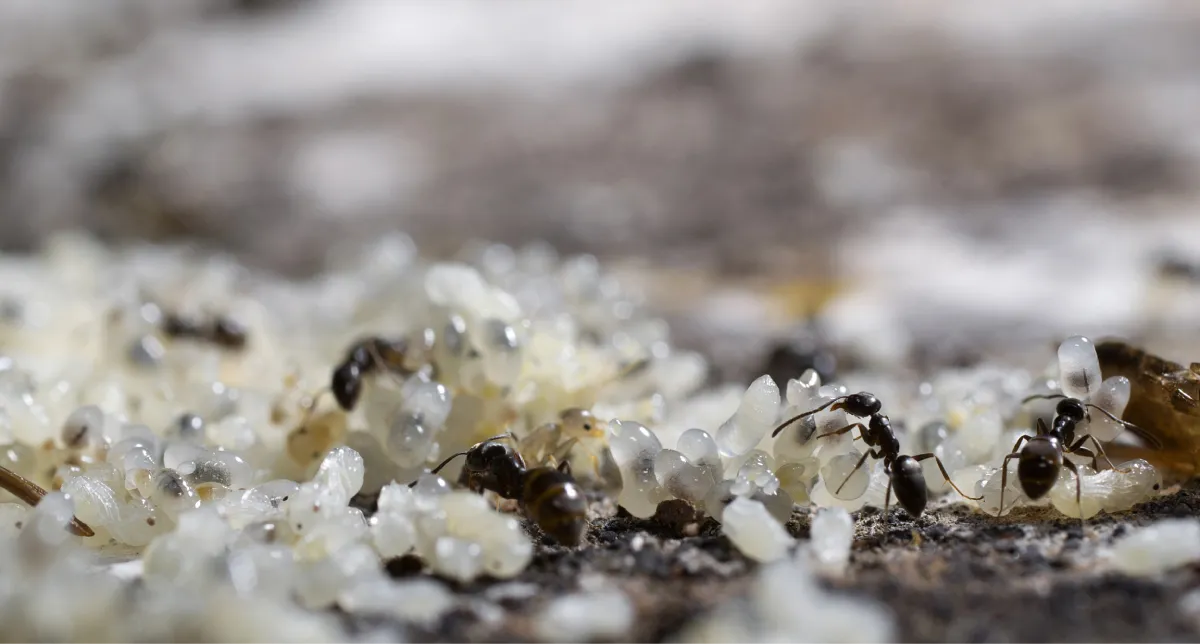
What do ant eggs look like? Ant eggs are typically small, oval-shaped, and white or translucent. They are soft and somewhat gelatinous in texture, measuring less than a millimeter in length. These eggs are usually laid in clusters and are tended to by worker ants, who protect and maintain them at a constant temperature and humidity to ensure their development.
Due to their small size and translucent nature, ant eggs can be difficult to spot without close inspection. They are often found in hidden areas such as wall voids, under floors, or within furniture, making them easy to overlook until the infestation becomes more apparent.
Why Finding Ant Eggs Is a Serious Concern
The presence of ant eggs in your home indicates that ants have established a nesting site rather than just passing through, meaning a mature colony is actively reproducing and expanding. Worker ants protect these eggs to ensure the colony’s survival, which leads to increased activity such as foraging, building additional nests, and, in some cases, causing structural damage, especially with carpenter ants. The longer the colony goes undisturbed, the more difficult it becomes to control.
1. It Means There’s a Colony Inside
Worker ants don’t just leave their eggs lying around. If you’ve found them, it means the queen ant is nesting somewhere nearby, and the colony is already established inside the walls, floors, or hidden crevices of your home.
A single colony can produce thousands of ants, and if conditions are right (moisture, warmth, and access to food), the colony will continue to grow.
2. You’re Dealing With a Breeding Ground
Eggs turn into larvae, which become pupae, and then develop into adult ants. This cycle happens rapidly, especially in warmer climates. By the time you see foraging ants, the colony has already matured and is reproducing.
Without disrupting this life cycle, the problem will worsen. Store-bought sprays won’t reach the nest, and crushing visible ants won’t stop the next generation.
3. Different Ants = Different Risks
Some species, like odorous house ants, are mainly a nuisance. Others, like carpenter ants, can cause structural damage. And fire ants? They can bite and sting.
If you’ve seen ant eggs but aren’t sure of the species, it’s time to call a professional for ant control to identify the species and take appropriate steps before the colony expands further.
Common Hiding Spots for Ant Eggs
Ants are adept at finding secluded and protected areas to lay their eggs. Common nesting sites include:
- Inside wall voids and behind baseboards
- Underneath the flooring or carpets
- Within furniture or appliances
- In insulation or attic spaces
- Behind kitchen cabinets or under sinks
These hidden locations provide the warmth and humidity necessary for egg development and offer protection from predators and human interference.
Common Triggers for Indoor Nesting:
- Access to food: Unsealed food items, crumbs, pet food, or sugary spills
- Moisture sources: Leaky pipes, clogged gutters, damp basements
- Warmth and shelter: Attics, wall voids, insulation, and under appliances
- Cracks and crevices: Entry points around doors, windows, and foundation
Even the smallest gap can allow ants to march in and set up a colony, bringing the eggs, larvae, and the queen along with them.
Steps to Take Upon Discovering Ant Eggs
If you find ant eggs in your home, it’s crucial to act promptly to prevent the infestation from worsening. Here are steps you can take:
1. Do Not Disturb the Eggs
Avoid touching or attempting to remove the eggs yourself. Disturbing the nest can cause the ants to scatter and establish new colonies elsewhere in your home.
2. Identify the Ant Species
Different ant species require different treatment methods. Identifying the specific type of ant can help determine the most effective control strategy. This is where professional Agoura Hills pest control services can be invaluable
3. Seek Professional Ant Control Services
Professional pest exterminators in Agoura Hills have the knowledge and tools to locate and control ant colonies effectively. They can assess the extent of the infestation, identify the ant species, and implement targeted treatments to control the colony.
Preventative Measures to Avoid Future Infestations
Preventing ants from entering your home in the first place is the most effective way to avoid infestations, especially when combined with professional pest control in Agoura Hills, CA. Here are some preventative measures:
- Seal Entry Points: Inspect your home for cracks, gaps, and holes, especially around doors, windows, and utility lines. Seal these entry points to prevent ants from gaining access.
- Maintain Cleanliness: Keep your home, especially the kitchen and dining areas, clean. Wipe down surfaces, store food in sealed containers, and promptly clean up spills and crumbs.
- Control Moisture Sources: Fix leaky pipes and faucets, and ensure proper ventilation in damp areas like bathrooms and basements. Ants are attracted to moisture, and reducing humidity can deter them.
- Regular Inspections: Conduct regular inspections of your home, especially in areas prone to ant activity. Early detection can prevent a minor issue from becoming a major infestation.
FAQs
1. What do ant eggs look like?
Ant eggs are small, white or translucent, oval-shaped, and often found in clusters.
2. Do ant eggs mean I have an infestation?
Yes, finding ant eggs usually means a colony is already established and actively growing.
3. Can I remove ant eggs myself?
It’s not recommended, as disturbing them can cause ants to spread and form new colonies.
4. Where are ant eggs commonly found?
They are often hidden in wall voids, under floors, behind cabinets, or near moisture sources.
5. When should I call a pest control professional?
If you see ant eggs or recurring ant activity, it’s best to call professionals before the colony expands.
About Facility Pest Control
Facility Pest Control is a local, family-owned business dedicated to providing specialized attention that big businesses can’t offer. Serving the Agoura Hills area, we offer a range of pest control services tailored to our clients’ unique needs.
Our general pest control services include monthly, hybrid, and bi-monthly treatments to keep your property pest-free, targeting pests like ants, spiders, roaches, and wasps, with add-on services for scorpions, fleas, and more. We treat both exterior and interior areas using environmentally friendly organic products, offer a 10% discount for select groups, and include a 30-day guarantee.
If you’ve discovered ant eggs in your home, don’t wait for the infestation to grow. Take action now to protect your property and prevent further damage. Contact us today for reliable, effective solutions and long-term pest prevention you can trust.
Other related blogs:
Signs Of Carpenter Ants In The House: What You Need To Know
How to Spot a Fire Ant Infestation and What to Do About It
How To Identify Ant Eggs: A Guide From Facility Pest Control