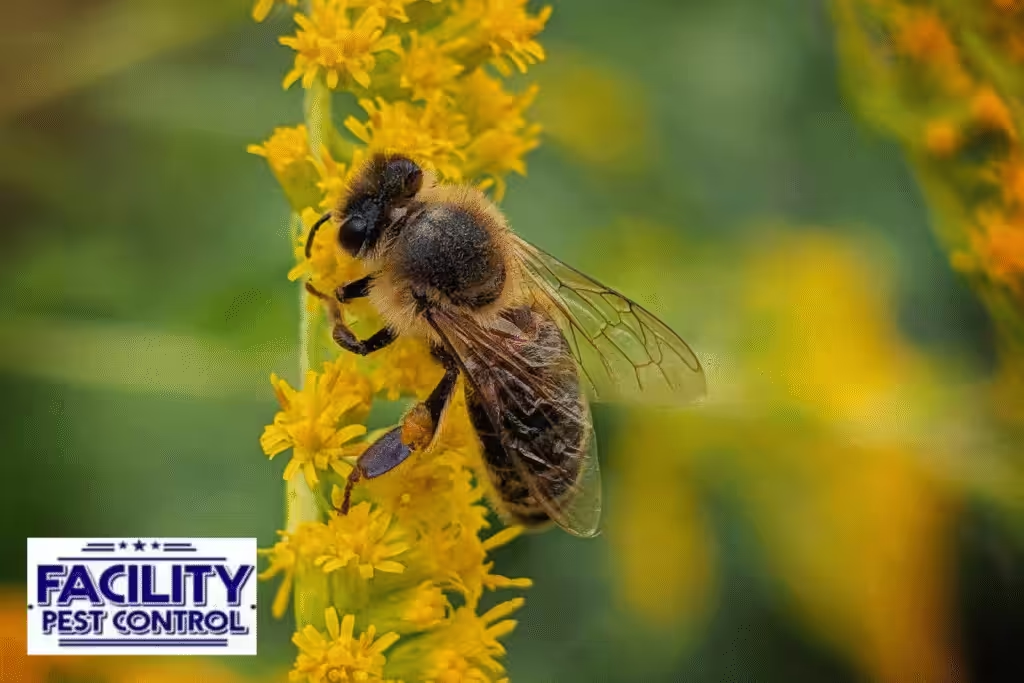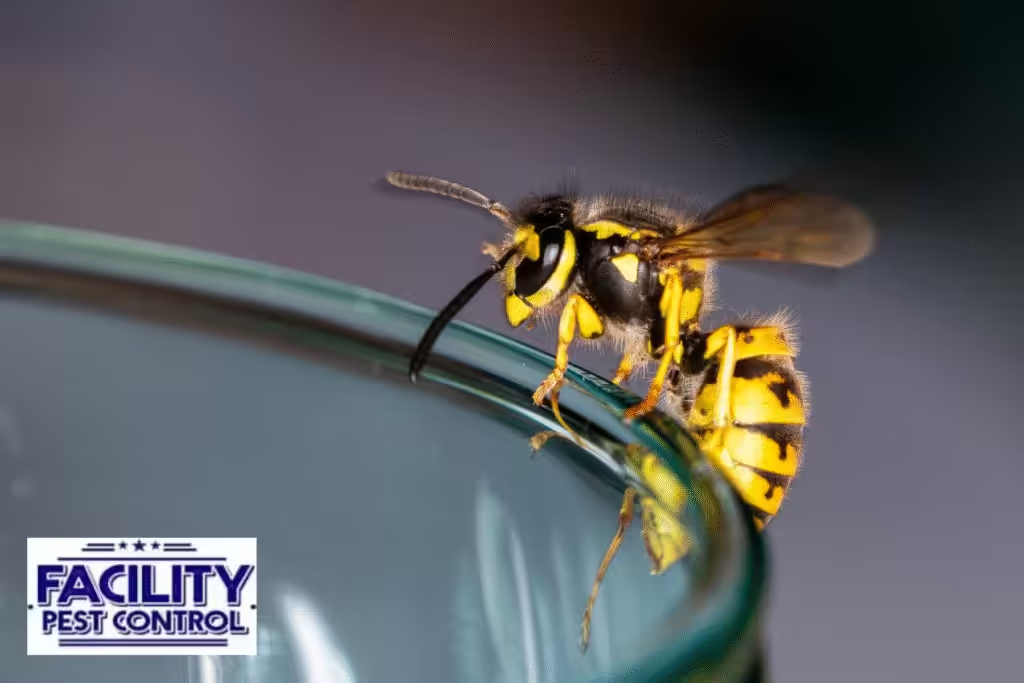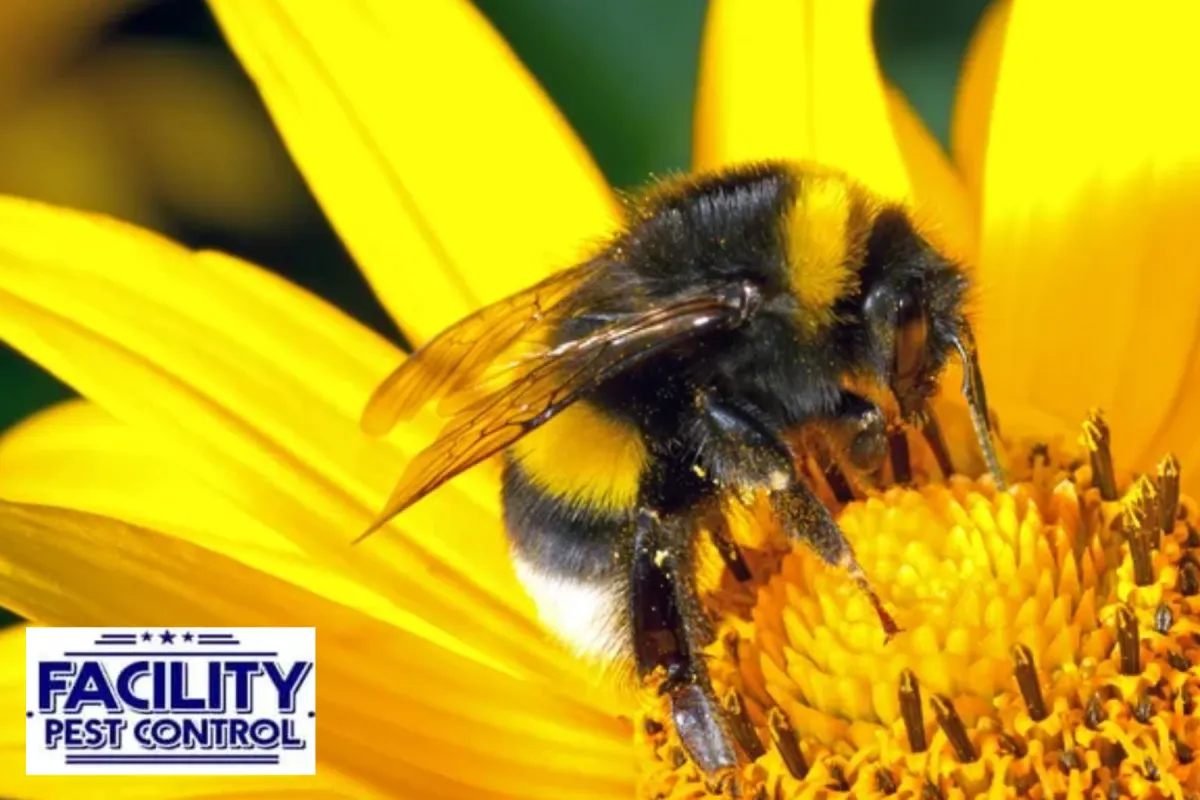
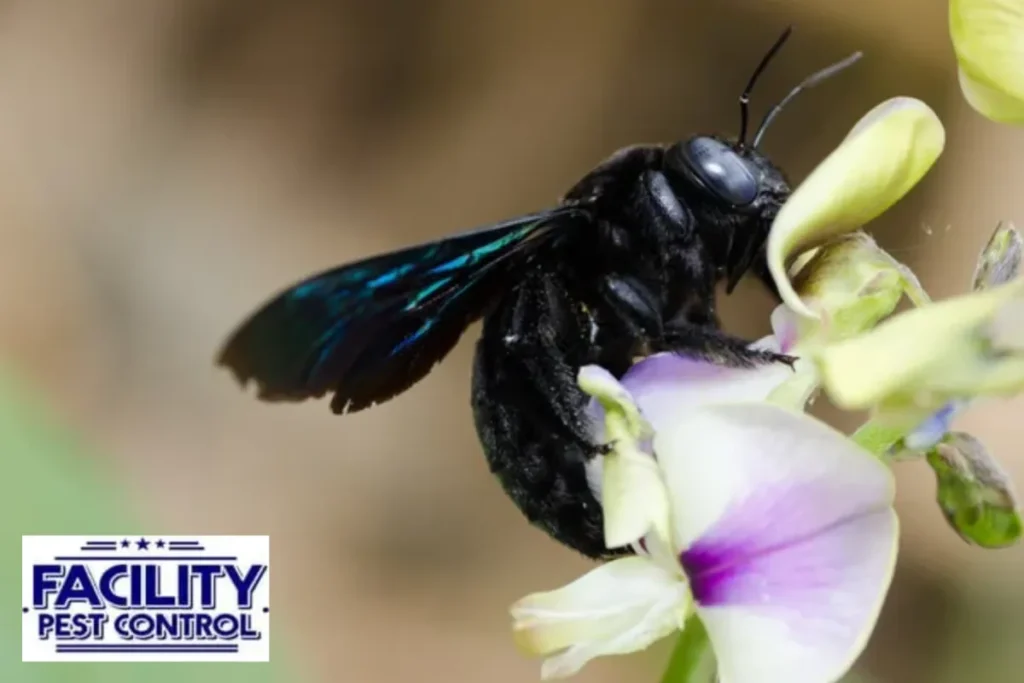
The main difference between a carpenter bee and a bumble bee is their abdomen: carpenter bees have a shiny, black, hairless abdomen, whereas bumble bees have a fuzzy abdomen completely covered in dense hairs. Additionally, carpenter bees bore into wood to build their nests, while bumble bees nest in the ground.
As the weather warms up, it is incredibly common to step into your backyard and be greeted by the loud, intimidating buzz of a massive insect flying past your head. For most homeowners, this sudden encounter triggers an immediate alarm. You might worry about painful stings or panic over the structural integrity of your home’s roofline and decking. However, before you assume the worst, it is essential to determine exactly who has moved into your yard. Proper bee control starts with knowing exactly what insect you are looking at, as misidentification can lead to unnecessary stress and ineffective treatments.
Key Physical and Behavioral Differences
At first glance, these two large, buzzing insects look almost identical. Both are robust, feature yellow and black coloring, and possess an audible, heavy buzz when in flight. However, knowing exactly which species is hovering around your property is crucial for deciding how to handle them. During a recent audit for a homeowner, the family was terrified of what they thought was a massive swarm of wood-destroying pests. Upon closer inspection, we reassured them that they were actually hosting a colony of highly beneficial, harmless ground-nesters.
To help you gain that same peace of mind, you need to know what to look for.
Comparison: Carpenter Bee vs. Bumble Bee
Understanding the physical traits and behavioral habits of these insects will help you confidently identify the culprit. Here is a breakdown of their primary differences:
| Feature | Carpenter Bee | Bumble Bee |
| Abdomen (Tail End) | Shiny, smooth, and entirely black, resembling polished plastic. | Fuzzy, covered entirely in dense yellow and black hairs. |
| Social Structure | Solitary. Females build individual nests independently. | Social. Live in large colonies with a central queen. |
| Nesting Location | Inside unpainted or weathered wood (eaves, fascias, decks). | Underground (often in abandoned rodent holes) or under dense brush. |
| Aggression Level | Males are aggressive but stingless; females rarely sting. | Generally docile while foraging, but will sting aggressively to defend their nest. |
| Ecological Role | Excellent pollinators, but they can cause structural property damage over time. | Essential pollinators are completely harmless to homes and structures. |
3 Steps to Identify Your Bee at a Glance
If you have a large insect hovering nearby and you aren’t quite sure which species it is, you don’t need to be an entomologist to identify it. Follow these three simple steps from a safe distance:
- Check the shine: This is the most definitive test. Look directly at the back half (the abdomen) of the bee. If it looks like polished black leather, a shiny black jellybean, or smooth plastic catching the sunlight, you are looking at a carpenter bee. If the entire body looks like it is wearing a tiny, fuzzy sweater, it is a bumblebee.
- Observe the flight pattern: Their behavior in the air is a massive tell. Carpenter bees tend to hover erratically like tiny helicopters. The males, in particular, will dart aggressively at perceived threats (including humans, pets, and other insects) before returning to hold their position in the same spot in the air. Bumble bees, on the other hand, usually fly in a much slower, more purposeful, and meandering path as they move directly from flower to flower.
- Follow them home: Watch where the bee goes when it is done foraging or patrolling. If it flies up toward your roofline, fascia boards, or the underside of your wooden deck, and disappears into a perfectly round half-inch hole, you have carpenter bees. If it drops down low to the ground and disappears under a thick bush, into a pile of yard debris, or into a hole in the dirt, you have a bumblebee colony.
Debunking the Myth: “All Large Bees Will Damage Your Home”
A very common industry misconception that leads to immense unnecessary panic is the belief that any massive, buzzing insect near your house is going to eat your wood.
The Reality: Bumble bees are physically incapable of chewing through wood. They do not possess the strong mandibles required to excavate wooden galleries, and therefore, they pose absolutely zero threat to the structural integrity of your home. They are highly beneficial ground-nesters that play a vital role in our local ecosystem. Only carpenter bees possess the specialized mouthparts required to bore into your eaves and fascias.
Misidentifying a bumblebee as a wood-destroying pest often leads well-meaning homeowners to spray harsh, over-the-counter chemicals on essential pollinators that were simply looking for a quiet patch of dirt to build their colony. Knowing the difference protects your home, your family, and the environment.
Applying our Eco-Shield Action Plan to Solve This
Because these two insects require entirely different approaches, accurate identification is the crucial first step. Once we know exactly what we are dealing with, Facility Pest Control deploys our proprietary Eco-Shield Action Plan to resolve the issue safely and effectively.
As a leading provider of pest control in Van Nuys, CA, we ensure our methods focus on safe, family- and pet-friendly treatments rather than outdated, one-size-fits-all broadcast sprays. Our plan is highly tailored to the insect’s biology on your property.
- If it’s a Bumble Bee: Because they are vital pollinators and do not damage property, our Eco-Shield Action Plan dictates a “relocate or tolerate” approach. If the ground nest is tucked away in a corner of your yard, far from foot traffic, we highly recommend leaving it alone until the colony naturally dies off in late fall. However, if the nest is located near a doorway or poses an immediate sting threat to pets or children, we utilize safe, non-lethal relocation techniques to move the colony off your property without harming the ecosystem.
- If it’s a Carpenter Bee: Since they directly threaten the structural integrity of your wood, we implement the targeted eradication and exclusion phases of our plan. We do not spray aerosol chemicals into the air. Instead, we use highly specialized, EPA-registered pesticides formulated specifically for wood-destroying insects. Our technicians apply precise insecticidal dusts directly deep into the excavated wood galleries to eliminate the active females and developing larvae. Following this, we plug the holes with hardwood dowels or putty and treat the wood’s surface to deter future infestations. This provides long-term relief while completely bypassing the need for harmful, wide-area chemical sprays.
Why Choose a Personalized, Family-Owned Approach
When looking for an exterminator in Van Nuys, residents often find themselves dealing with large, national corporations that offer generalized treatments and treat customers like just another number on a spreadsheet. Facility Pest Control is entirely different. We are a family-owned and customer-focused business that deeply values personalized service, unshakeable trust, and long-term reliability. We stand out by offering the specialized attention and tailored solutions that big businesses simply cannot provide.
Our target audience includes homeowners and businesses across the region, and we understand that persistent pest infestations severely disrupt your daily life. Whether you live or need an assessment at a commercial property, our approach remains the same: friendly, professional, and entirely solution-oriented. We prioritize your family’s health and safety, ensuring every customer feels valued and protected.
We aim to give our customers total peace of mind and relief. You should never have to worry about the structural safety of your home or the health of your pets. Unlike larger corporations, our services come with strict guarantees. Furthermore, we believe in supporting our community, which is why we proudly provide special discounts for healthcare workers, military personnel, first responders, teachers, and senior citizens. When you need an exterminator in Van Nuys, CA, choose a partner that builds long-term relationships and delivers lasting results.
People Also Ask
Do bumble bees sting?
Yes, female bumble bees can sting, and unlike honeybees, they can sting multiple times without dying. However, they are generally very docile while foraging for nectar. They typically only become aggressive and sting if their ground nest is directly threatened, disturbed, or stepped on.
How do I stop carpenter bees from returning every spring?
The best preventative measure is to eliminate their preferred nesting environment. Carpenter bees seek out unpainted, unfinished, or highly weathered softwoods. Painting, heavily staining, or applying specialized citrus/almond oil repellents to your exterior wood changes its signature, making it highly unappealing to scouting females. Additionally, plugging any old holes from previous years prevents them from reusing existing tunnels.
Are the large black bees hovering on my porch aggressive?
The large bees hovering aggressively at eye level and darting toward you are almost certainly male carpenter bees. While their erratic flight pattern and loud buzzing are highly intimidating, it is entirely a bluff. Male carpenter bees do not have stingers and cannot physically harm you.
What should I do if I find a bee nest in the ground?
If you find a bumblebee nest in the ground, the best course of action is to leave it alone if it is not in a high-traffic area. The colony will naturally die off in the late fall. If it poses a danger to your family or pets, contact a professional service to discuss safe relocation options rather than attempting to exterminate it yourself.
Let Us Protect Your Home Today
Dealing with aggressive, buzzing insects and hidden structural damage is stressful, but you don’t have to manage it alone. At Facility Pest Control, we are dedicated to giving you the peace of mind that comes with a secure, pest-free home. Our tailored solutions are designed to address your unique needs while protecting your family’s health and the environment.
We encourage you to take the first step toward reclaiming your outdoor spaces. Would you like me to schedule an inspection to assess your property today? Explore our specialized services to find solutions tailored specifically to your home, and feel free to reach out with any questions about long-term prevention.